




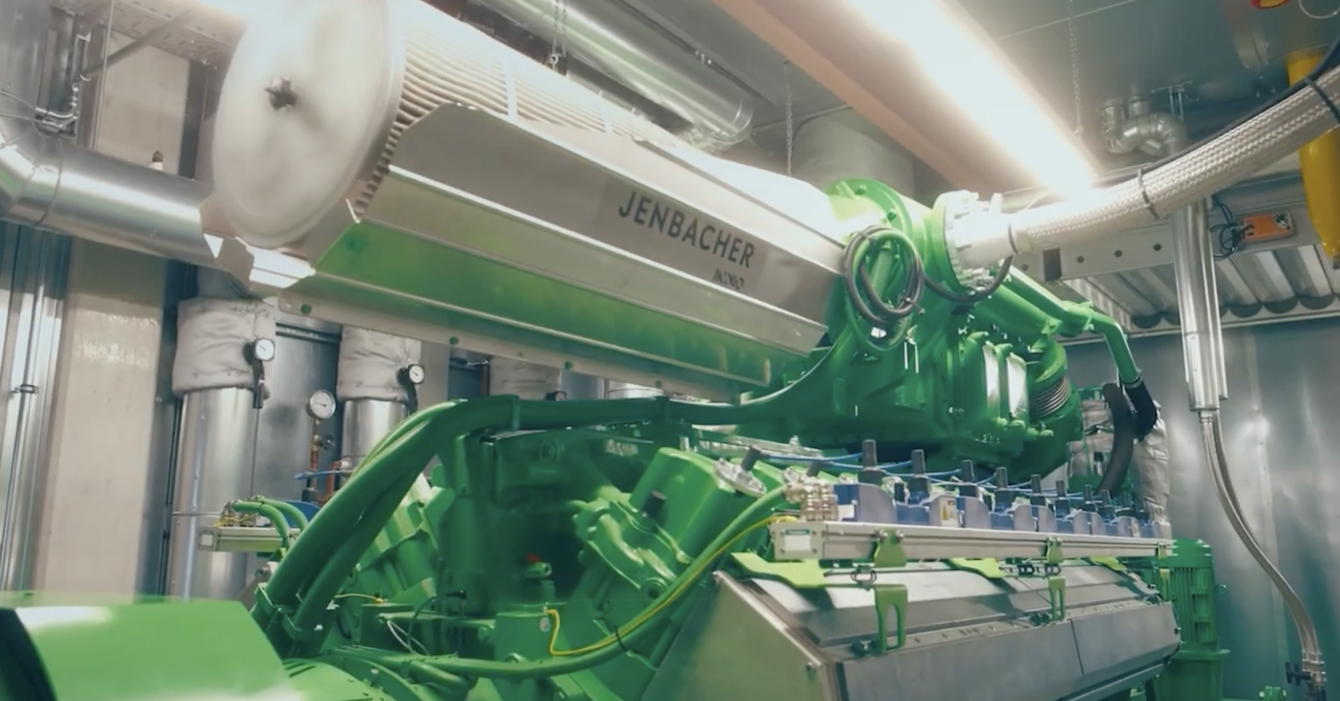
Gas piston power plants
In a dynamic energy market, the ability to quickly adapt to load changes and use alternative fuels is becoming crucial. Vancosta offers the construction of gas piston power plants (GPPs) based on INNIO Jenbacher engines — a world leader in high-efficiency generation. Our solutions are based on the time-tested 420 and 620 series, which provide the highest electrical efficiency in their class. These units are designed for long-term operation with maximum return on each cubic meter of gas.
Jenbacher Series 4 (model 420, power ~1.5 MW)
It is characterized by high power density and design reliability. Ideal for cascade solutions at medium-power facilities.
Jenbacher Series 6 (model 620, power ~3.3 MW)

A flagship series that combines an innovative fuel combustion system and high shaft rotation speed, which allows achieving electrical efficiency of over 45%.
Key Features and Benefits
- High electrical efficiency: GPPs are the best choice if the main priority is to generate electricity with minimal fuel consumption.
- Fuel versatility: Jenbacher units operate stably not only on natural gas, but also on biogas, landfill gas, mine and associated petroleum gases.
- Maneuverability and operation at partial loads: The engines are able to quickly reach rated power and operate effectively at a load of 50% without significant loss of efficiency.
- Operation at low gas pressure: Unlike turbines, piston engines do not require high fuel pressure in the main, which simplifies design and reduces the cost of pressure boosting equipment.
Technology limitations
- Heat potential: The main type of thermal energy is hot water (up to 90–95°C). Steam production is possible only in limited quantities using special steam generator units.
- Maintenance: Piston engines have a larger number of moving parts, which requires strict adherence to service schedules and lubricant replacement.
Typical scenarios and areas of application of a gas piston power plant:
- Agricultural complex: Use of biogas from livestock waste to meet own needs for electricity and heat.
- Food industry: Production where electricity and large volumes of hot water are required for sanitary needs or pasteurization.
- Municipal sector: Cogeneration units for boiler houses, ensuring stable heat supply to neighborhoods during fluctuations in consumption.
- Data centers and shopping malls: Creation of independent power nodes to protect against blackouts and optimize costs for network electricity.
To increase the autonomy of your power plant, Vancosta recommends the integration of additional systems:
- Cogeneration modules (CHP): heat exchangers for the recovery of engine jacket heat and exhaust gases, which increases the overall efficiency up to 90%
- Alternative fuel preparation systems
- Black Start system: batteries or diesel start for autonomous start of the plant in the absence of the network
- Aggregate control systems: intelligent synchronization of several modules and management of electricity export to the network
- Energy storage installations